
5 Top Tips To Refresh Your Rack for Spring Climbing
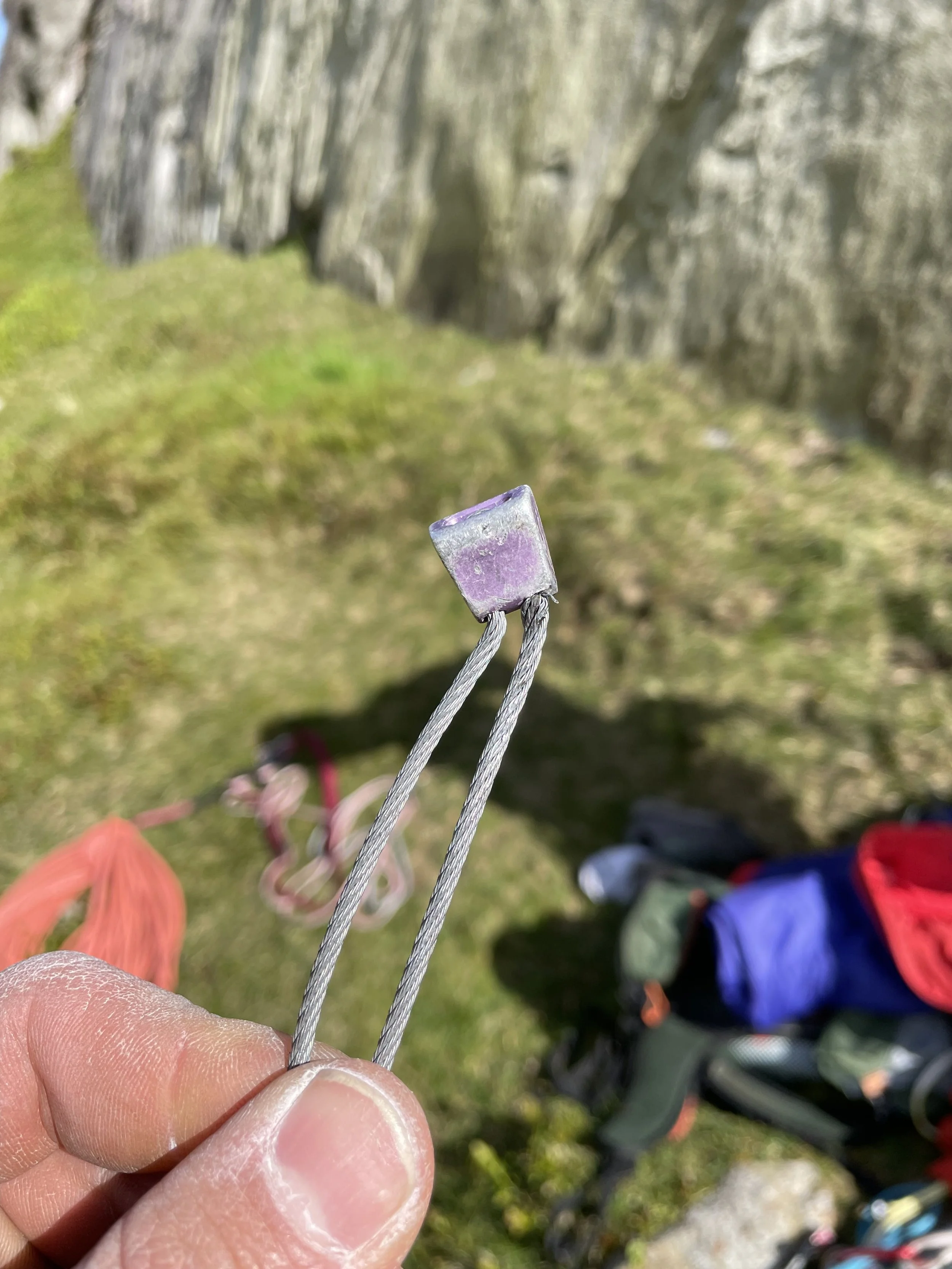
A small nut with a frayed wire.
1. Do a full gear inspection (properly, not just a glance)
Go piece by piece.
Check cams for smooth action, frayed trigger wires, and fluffy slings which are past their sell by date.
Check nuts for sharp edges or deformation if they’ve been hammered into cracks winter climbing and make sure the wires themselves aren’t frayed.
Check slings for fluffing, fading, or stiffness and quickdraw dogbones for abrasion. Retire anything suspect. Now is a good time to give your soft goods a refresh.
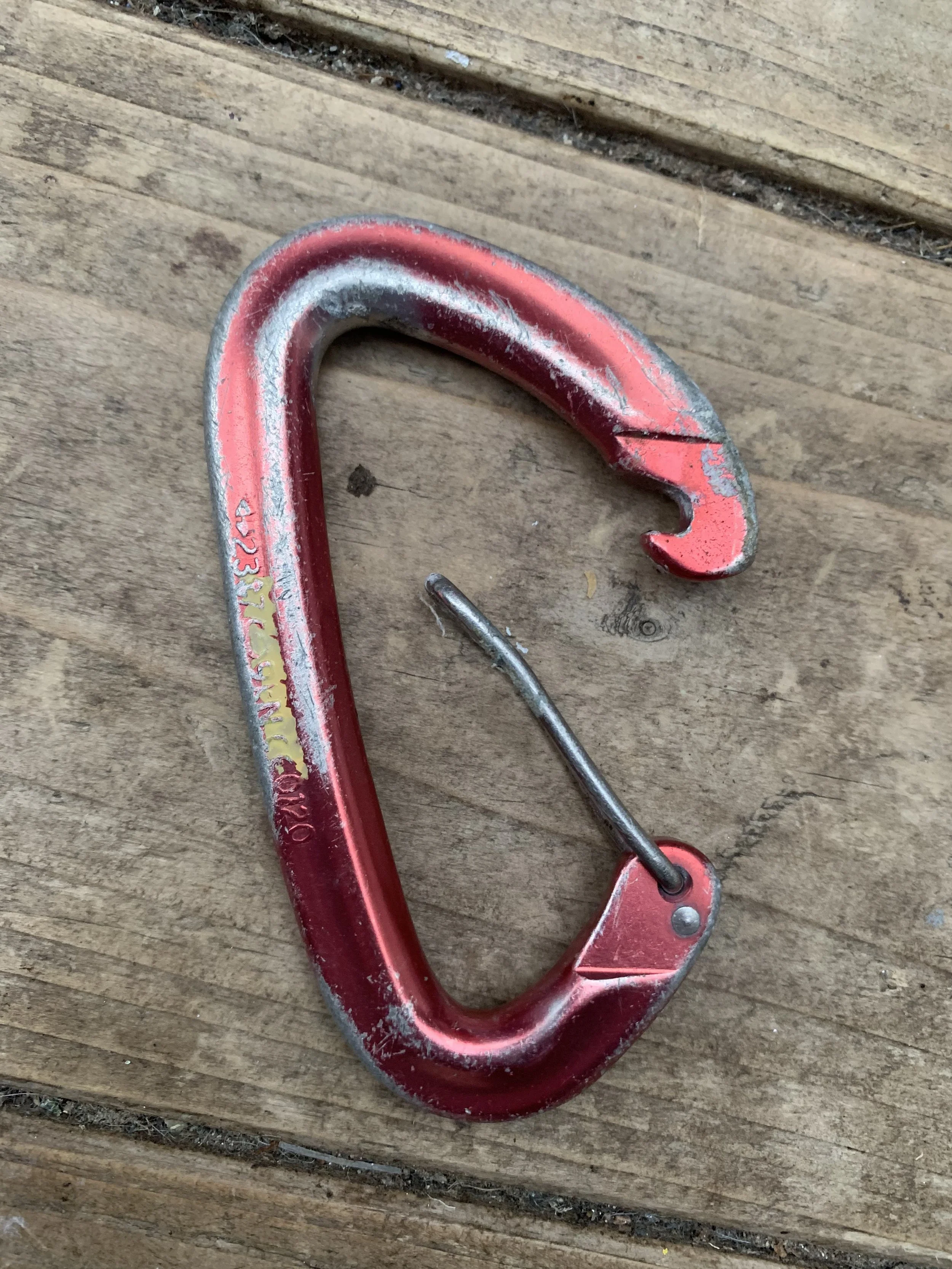
A carabiner with broken gate spring. Time to replace this one!
2. Clean and lube moving parts
Wash cams in warm water, dry them thoroughly, then lightly lube the axles (dry PTFE or similar, not WD-40). You’ll instantly notice the difference placing them, especially if they’re a tad stiff from rust which can occur if they’ve been used for winter climbing and put away damp. Check carabiner gates open and close easily and screw gate thimbles aren’t sticky.
3. Rebuild and rationalise your rack
After lots of use, racks often end up a mess. Decide what you actually need for your typical routes:
Strip duplicates you never place
Fill obvious gaps (e.g. missing pieces which haven't been replaced)
Standardise quickdraw lengths if they're mismatched and random. It's nice to have even numbers of each length to rack equally left and right on your harness.
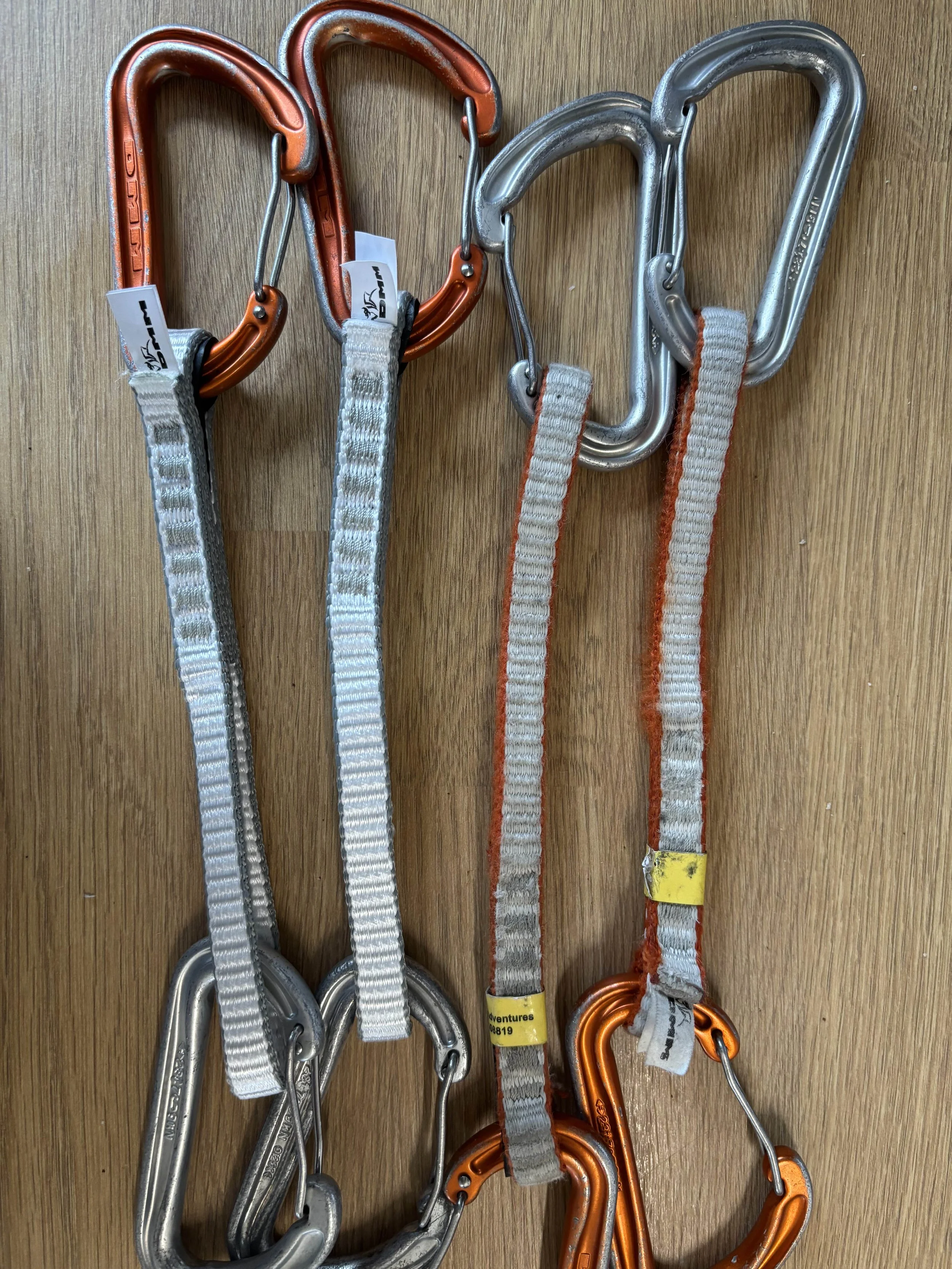
Shiny new quickdraw dogbones.
4. Re-sling where needed
If you’ve got older cams or tatty extendable slings, replace them. Either send them off for re-slinging or do it yourself (e.g 60cm extenders). Looking down at your runners and seeing a pitch of shiny new quickdraws can give a noticeable mental boost when you feel rusty on the first rock route of the year.
5. Check your rope
Flake it out, look for soft spots, flat sections, or damage. Give it a wash if it’s filthy after a winter of climbing at the gym.