
How Hot Is Too Hot?
Most outdoor instructors have a pretty good feel for when it's too cold to run an activity.
Strong winds, driving rain, freezing temperatures and winter conditions are familiar territory. We've spent years learning how to manage those risks, and most of us have a clear idea of when a plan needs to change.
For many instructors in the UK, regularly dealing with temperatures in the high twenties and thirties is a relatively new phenomenon. As summers become warmer, a question that I have been asking myself more often is: how hot is too hot?
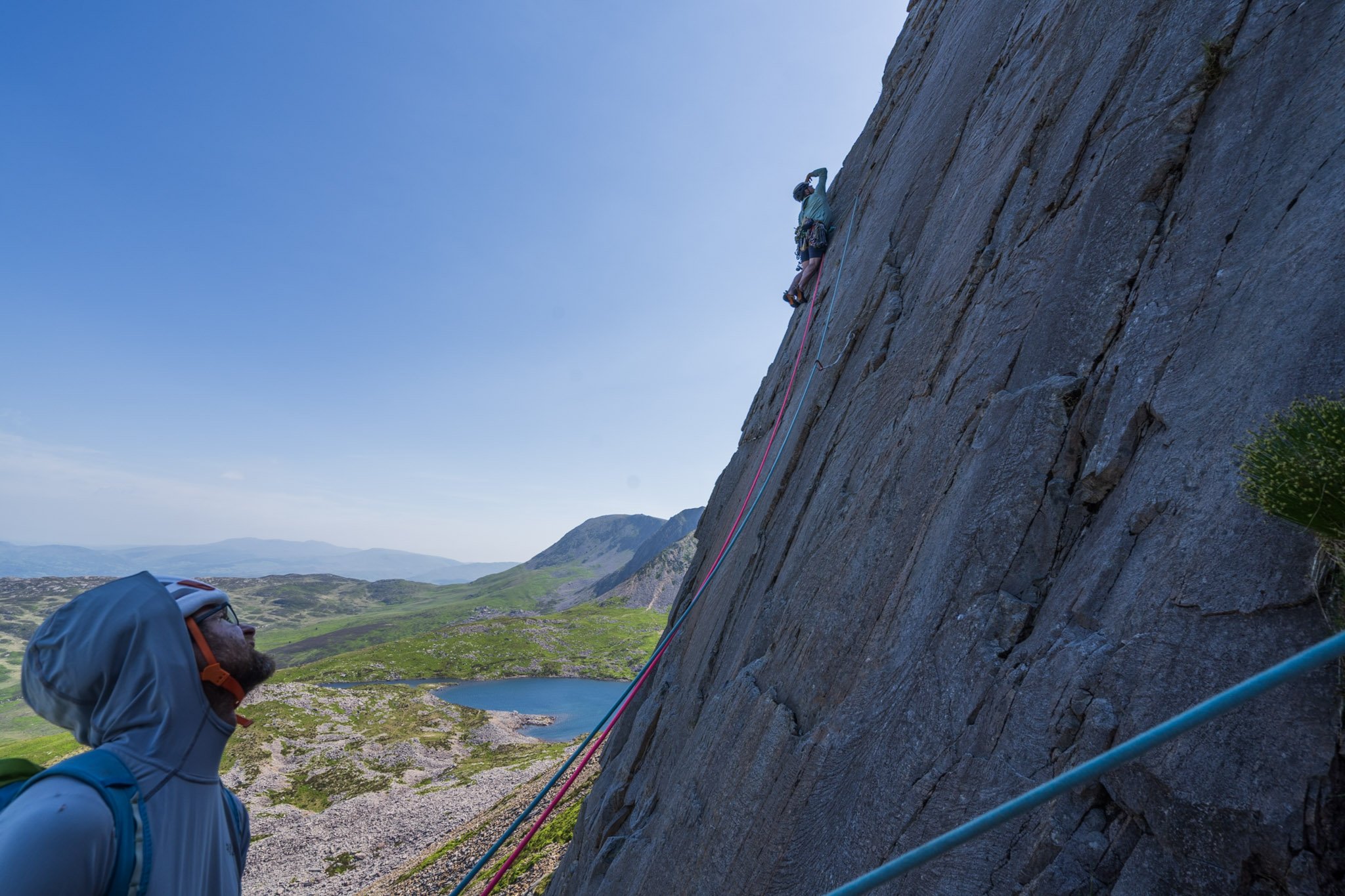
Climbing in the shade and a sun hoody to keep from burning.
As a professional instructor, regularly climbing and mountaineering with customers, I thought I would look into the regulation in the UK around heat and workplaces. The UK's Health and Safety Executive doesn't set a maximum temperature for working outdoors because the danger from “heat stress” depends on far more than the number on the weather forecast. Humidity, direct sun, wind, the amount of effort you're putting in and for climbing, even the colour of the rock can all make a difference.
Anyone who has climbed on a south-facing crag in North Wales on a still summer day will know this already. A forecast of 20°C on a humid day can feel surprisingly hard work when you're standing on a ledge with no shade, no breeze and the sun reflecting back off the rock.
So, what is heat stress? The HSE describes heat stress as what happens when the body is unable to regulate its core temperature effectively while working in hot conditions, leading to strain on the heart and circulation and an increased risk of “heat-related illness”. (hse.gov.uk)
As climbers and mountaineers, there are two commonly known heat related illnesses.
Firstly, heat exhaustion which is the body's warning sign that it is struggling to keep cool. Symptoms can include heavy sweating, dizziness, headache, muscle cramps, nausea, unusual fatigue and difficulty concentrating. Someone with heat exhaustion will often look unwell but will usually remain alert and able to hold a conversation.
When the a persons body tempreture rises further, heat stroke can occur. This is serious, potentially fatal condition and is a medical emergency. The body's temperature regulation starts to fail and the person may become confused, disorientated, unsteady on their feet or behave unusually. They may stop sweating. In severe cases they may become unconscious. In both case immediate cooling and emergency medical assistance are required.
The danger from hot weather doesn’t rely solely on tempreture. The humidity of a day also plays a huge factor in how hot a day feels and how the temperature affects our bodies. The reason for this is that your body relies on sweat evaporating to keep cool. When the air is humid, sweat doesn't evaporate as efficiently, so your body has to work much harder to regulate its temperature. Meteorologists use a method of combining air temperature and humidity called ‘Wet Bulb Temperature’ to help convey the effect of the weather on us. Many people will be familiar with the idea of wind chill where the cooling effect of the wind gives a ‘feels like’ temperature on the forecast, and wet bulb temperature is similar.
Wet-bulb temperature is measured by wrapping a thermometer bulb in a wet cloth and passing air over it; the evaporation of water cools the thermometer, and the reading depends on how easily that evaporation can happen. In dry air, evaporation is efficient and the wet-bulb temperature sits below the air temperature. In humid air, evaporation is restricted and the wet-bulb temperature rises closer to the actual air temperature. The higher the wet-bulb temperature, the harder it is for sweat to evaporate and the more strain the body is under to regulate its core temperature during exercise.
Obviously, outdoor sports such as climbing or mountaineering aren’t the only outdoor activities exposed to with hotter conditions. Wimbledon uses a formal heat rule based on wet bulb tempreture, which takes into account humidity and solar radiation as well as air temperature. Players are allowed an extended break when wet bulb tempreture exceeds 30.1°C. Football also uses wet bulb temperature guidance, with cooling breaks and match modifications introduced as conditions become more demanding. The common theme is that decisions are increasingly being based on wet bulb temperature and how that contributes to heat stress rather than air temperature alone.
In the UK, health alerts are often issued when temperatures move into the high twenties and low thirties. That doesn't necessarily mean climbing becomes unsafe at 30°C, but it is the sort of weather where heat-related illness becomes a realistic consideration, particularly for people who are carrying equipment, spending long periods in direct sun or are not used to exercise in hot conditions.
So, how does understanding the risks from heat and humidity affect the decisions we make climbing or mountaineering? We need to pay more attention to the likely conditions at the crag than the headline temperature and make sensible descriptions accordingly. A breezy North facing mountain route in the shade can feel comfortable on a 30°C day, while a sheltered single-pitch venue can become quickly unpleasant.
If the forecast is hot, a few simple adjustments go a long way. Start early, choose a venue with shade and exposed to the wind if possible, carry extra water, adjust your expectations towards easier routes so you work less hard, take sensible breaks and be prepared to change your plans or finish earlier than expected.
Clothing can also play a role in keeping cool. Cover up to avoid the UV with light weight, light coloured, trousers and a synthetic hooded sun proof layer, rather than the classic shorts and cotton t shirt. Don’t forget the sun cream, a hat and sunglasses, and most importantly, don't be afraid to change plans and go to the beach.